TERRI GRIFFITHS ON NUTRITION
  • Home
  • My Recipe's
  • Food & Lifestyle Articles
    • A Good Nights Sleep
    • Diet or Lifestyle Change
    • Dieting for a Show
    • Fats are GOOD
    • Grains , Legumes, Nuts and Seeds
    • Intermittent Fasting
    • Leg Training
    • Organic, Local and Seasonal
    • Portion Control
    • Prebiotics and Probiotics
    • Processed, Unprocessed and E Numbers
    • The Biology Bit
    • Vitamins and Minerals
    • What are Macronutrients?
  • Inspirational Stories & People
  • Blog
  • Reviews

organic, local and seasonal

I often get asked why it is so important to stick to organic, seasonal, or local foods. We see the signs in our supermarkets and hear TV chefs talking about it all the time, but why? Why organic…Why seasonal…and why local? Especially when they all seem to be much more expensive in most cases? So, I’m hopefully going to answer these questions and let you know the benefits of choosing wisely. 
why organic?

​Organic foods must be grown without the use of synthetic pesticides, GMOs (Genetically Modified Organisms (GMOs) or genetically engineered (GE) foods are plants whose DNA has been altered in ways that cannot occur in nature), petroleum-based fertilisers, and sewage sludge-based fertilisers.

And if raising organic livestock for meat, eggs and dairy products, they must have access to the outdoors, be grass fed and/or be given organic feed. They may not be given antibiotics, growth hormones, or any animal by-products.
Organic meat and milk are richer in certain nutrients. Results of a 2016 European study show that levels of certain nutrients, including omega-3 fatty acids, were up to 50 percent higher in organic meat and milk than in conventionally raised versions.
​
Read on for more details -
Organic Foods - 
Why is this important?
Non-Organic Foods -
So what’s the problem? -
​The soil should be prepared with only organic fertilisers, compost and manure.
​The soil keeps its natural nutrients and is undamaged and natural. This gets passed onto the nutritional value of the food grown in it. Keeping it in much higher value in its natural fibres/proteins/carbs, fats/vitamins/minerals etc whilst growing. Growing in a true quality soil, however, is more expensive to maintain.
​Grown with synthetic and/or chemical fertilisers
​Soil is often left empty of nutrients killed off by chemicals. Foods are often mass produced for quantity rather than quality, as using chemical fertilisers are much cheaper and mass produced. 
Pests are controlled by natural methods. 
Using birds, traps, natural methods, and natural pesticides, such as salt/garlic/onion sprays, or other plants grown known to keep pests away.
Pests are controlled with synthetic pesticides.
Exposure to pesticides can cause acute (short term) or chronic (long term) effects on animals and humans. Especially in the reproductive, endocrine, and central nervous systems. There has been some bizarre methods found out to be used in the past, and sometimes still today such as arsenic and mercury-based pesticides. This also caused long tern damage to the soil.
Weeds are controlled naturally by crop rotation, hand weeding and mulching (loose soil coverings).
Again, keeping nutritional value of the soil and plants intact. For higher nutritional value in the foods produced. Taking care of the land and foods produced.
Weeds are controlled by chemical herbicides
Known herbicide examples are bleach, codeine and ammonia. Persistent use of herbicides can remain active in the environment for long periods of time, potentially causing soil and water contamination and adverse effects to animals, insects and us humans and other non-targeted organisms. In some cases, compounds that result from herbicide degradation may continue to be significantly toxic in the environment.
Livestock are given organic, hormone and Non-GMO feed
With livestock being brought up on a natural healthy diet, and roaming free, so receiving the exercise they need, the quality of their meat again, has a better-quality taste, and nutritional value. ​
Livestock are given growth hormones for faster growth, as well as non-organic, GMO feed.
​
Who knows what goes into the food these animals eat, but again are fed as cheap as possible because of mass production, laced often with steroids and growth hormones to make they grow quicker, alongside pesticides, which if we eat the meat, we eat what they too have been eating. Humans are more than capable of producing our own hormones. Eating meats fortified with animal hormones can unbalance our own production.  Some milk dairy has been found to have up to 10 times as much GH in it over an organic or raw milk.
Disease is prevented with natural methods such as clean housing, rotational free roaming and grazing, and a cleaner healthy diet.
Again ensuring a healthier raised meat, naturally higher in nutrients and antioxidants. And know the animal has a more natural and grazing existence is a benefit enough.
When animals and chickens are packed together and produced in mass quantities, there is a lot of infection. So these animals/birds are often fed antibiotics and medications are used to prevent livestock disease
Our over exposure to antibiotics has been highlighted in many a report in recent times. Our taking them an how much we could be absorbing in our food can have an adverse side effect on our own gut bacteria, in that it can kill good bacteria we need for our immune system, and make us immune to them, when and if we do actually need them to fight infection.
Livestock must have access to the outdoors
For important free grazing socialising, exercise, fresh air as all animals naturally need. A healthier happier animal.
It isn’t essential that they have access to the outdoors. They may or may not. Often not the best care given to the animal’s wellbeing.
Can often be kept indoors, packed together in a not extremely unhealthy environment. Hence all the medications and antibiotics needed as mentioned above.

why Local?


There is no official or specific definition for “local food”. It could be grown in your local community, your county, your region, or your country. However, the ideal is to have the food from production to table as soon as you can. And during large portions of the year it is usually possible to find food grown close to home, either by researching local farmers, farmers shops and markets or having a bash at growing it yourself.
​
Be aware that small local farmers often use organic methods but sometimes cannot afford to become certified organic. Chat with your local source or farmer to find out what methods they use.


Picture
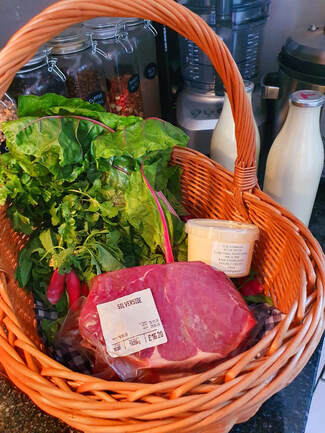
Traceability is important to many people nowadays. Knowing where your food comes from, and how its grown and knowing the meat is grown ethically, and even being able to see it growing or watch the animals grazing, offers its own pleasures. Supermarkets can often plump foods with water to up the weight and add colour to make it look that distinctive ‘red ‘colour. The products you grow yourself, get direct from farms, or from a local organic butcher will often look quite different that what you see on shelves of supermarkets. I always find locally raised meat and dairies from local farms taste so much better. I was quite surprised how different meat, chicken and veg can look to what’s in supermarkets. But am always blown away by flavour even when the size, colour and shape isn’t what you are used to. It is by far a superior quality, and that’s what matters to me.

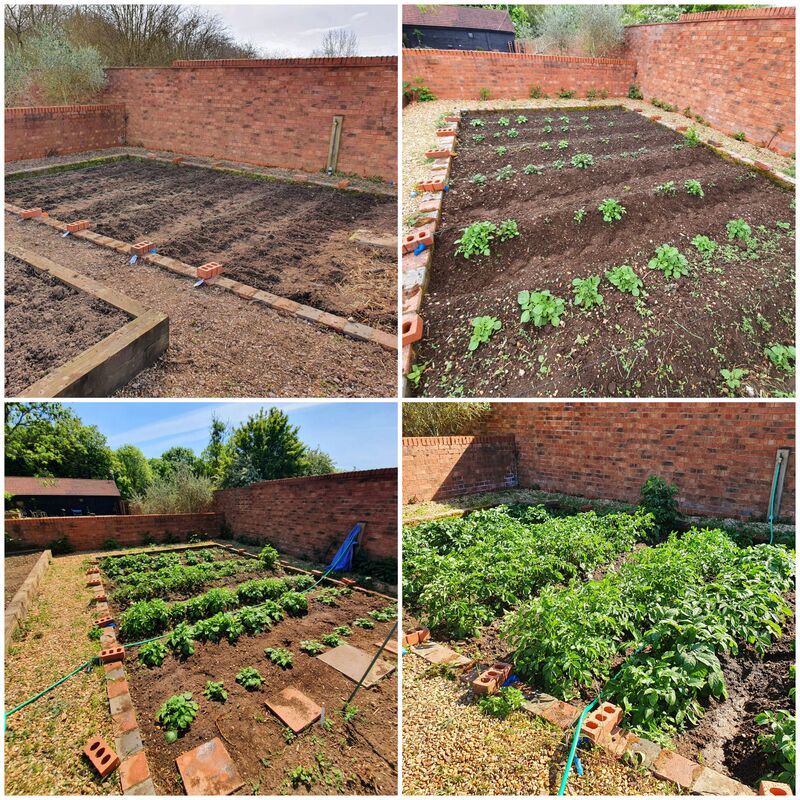
​Sustainability is more important to many too. And your home grown, or local foods are often sustainable. Sustainable food isn’t only about the food itself. It’s a combination of factors including how the food is produced, how it’s distributed, how it’s packaged and how it’s consumed. A sustainable food system is a collaborative network that integrates several components. Enhancing a community's environmental development, economic and social well-being. I help at Treewell Community Farm, which is where I (and many others) grow my own vegetables organically, in return for helping out around the farm and at events. There are 21 plots there looked after by many, and we all share our grown fodder. We grown an array of fruit and vegetables and share them with each other at harvest times. It’s a great sustainable little idea. Community, organic, traceable, fresh, free, takes care of the land and a great sense of well being all in one hit.

To help financially support your local farmer. Although produce can sometimes be more expensive to buy, money stays within your local economy and community. More money goes directly to the farmer, instead of to things like marketing and distribution. I get my milk, meat and dairy from G&A Adderson Dairy farm in Crawley. They only sell to the community. If they were to sell to the big supermarkets, they would have to sell a pint of milk at 20-30p a litre. This has only recently gone up from about 8 pence before being revealed a short time ago. And if they sell direct to us the locals, its £1.40 a litre, that’s a 60-70% increase on profit. A massive difference! And so Crawley decided to sell only locally. Thankfully! And raw by the way! Even better.

Reduced Transportation. When food must travel 100’s or sometimes 1000’s of miles, it is often picked not quite ripe, and then gassed to ripen after its been transported. So not fully ripened and the gassing, can again mean its lower in nutritional value and taste quality. Or the food is highly processed in factories using preservatives, irradiation, and other means to keep it stable for transport. Also, all this transportation by air, sea or land produces high carbon emissions. So also damaging to the environment.

Less Packaging – Buying or growing locally means less packaging too. When I go to farmers markets, or harvest my own, fruit and veg go straight in my basket as is. No plastic, no paper bags, no polystyrene, no carrier bags. Just fruit and veg. So, zero waste is needed when it comes to fruit and veg.

Buy/Grow what you need – Often, I only need one or two of something for a recipe. And often was frustrated in supermarkets when I have to buy bigger packs as it often means having to eat more or throwing unused goods away. If I want one apple, or one leek, I buy one as that’s all I need. I know this is getting better in some supermarkets, but their marketing deals will often try and entice you to buy bigger. Resulting in often eating more than you need to and paying more than you need to.

For freshness reasons. Local food is harvested when ripe, often organic, and therefore fresher and jam packed of all its nutritional value. And being local it reduces carbon emissions as transportation is minimal, so helps the environment. You can’t beat it!


Why Seasonal?

Picture
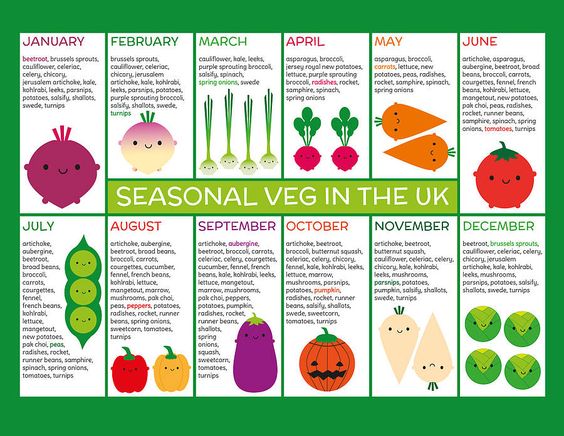
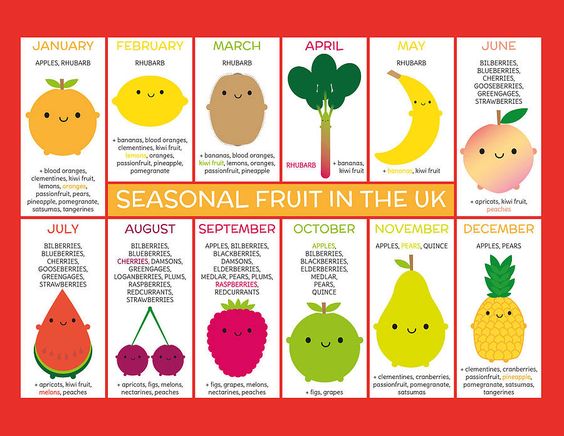
I love wondering through the apple trees at Treewell Farm and picking an apple off the tree and eating it. And I remember going strawberry picking when I was a kid and stuffing my face with freshly picked strawberries.  Or eating the pears from the pear tree when camping in Dads back garden. All fresh, and in season. The way it should be. It is really for a lot of the same reasons as buying locally, but also for better flavours and often cheaper! 
Full of flavour, it may be crisper or juicier or both! (depending on what you’re eating!). Fruit and veg that is picked fresh when it’s fully ripened tastes amazing and texture can’t be beat. Picking it ripe, getting it on your table quicker and eating it is the way it should be. As mentioned before, if food is out of season, it has probably been shipped in from somewhere (Transport costs and carbon emission needed). And/or picked when not ripe sprayed with gasses or chemicals to ripen when needed. 
Nutritionally Packed – When produce is picked before it’s ripe, the nutrients do not fully develop in the flesh of the fruit. Plants need the sun to grow and picking them before they are ripe cuts off the nutrient availability. Genetic modification is also sometimes used, which can alter how the crop was naturally supposed to be consumed which also effect the nutrient value. These GMO or out of season and forcibly grown produce can have about 25% - 50% less nutritional value than the fresh seasonal produce. And a lack of traceability meaning you rarely know where it comes from, and/or what it’s been treated with (pesticides and herbicides). If you eat local and seasonally, throughout the year you will have a better overall variety as fruit and veg comes and goes out of season, you will be eating only what is available. Forcing a good level of diversity, which will assist you in eating a balanced diet and is great for the gut.

Cost Effective – Supply and demand simply explains how buying produce seasonally saves money. Produce in season is more abundant, so it is less per pound in the shops. If you are buying produce that is out of season, there is travel, time and added expenses to grow it in a greenhouse etc.

Environmentally friendly – As we ship in produce from other areas, it requires fuel to get the produce to the shops. This again does not help the carbon footprint and isn’t sustainable or often traceable.

Community benefit – Buying your produce from local farmer’s markets, farm shops or growing your own in your garden or community farms/allotments and sharing excess is a great way to build community, but also allows you to feel more connected to where your food is coming from and who is growing it.
 
I hope this has answered your questions. And why I promote organic, local and seasonal eating. And I also hope I have inspired you to go check out your farmers markets and shops in your area. And to get potting in that back garden!
Picture
Picture

Thank you for visiting my site!

​Privacy Policy

Picture
Picture
Picture
Picture
Picture
Picture
Picture
Proudly powered by Weebly
  • Home
  • My Recipe's
  • Food & Lifestyle Articles
    • A Good Nights Sleep
    • Diet or Lifestyle Change
    • Dieting for a Show
    • Fats are GOOD
    • Grains , Legumes, Nuts and Seeds
    • Intermittent Fasting
    • Leg Training
    • Organic, Local and Seasonal
    • Portion Control
    • Prebiotics and Probiotics
    • Processed, Unprocessed and E Numbers
    • The Biology Bit
    • Vitamins and Minerals
    • What are Macronutrients?
  • Inspirational Stories & People
  • Blog
  • Reviews